Control signs decide who moves and who waits. They are the only signs that can put you at fault for a collision before you have done anything else wrong.
Why they look the way they do
Control signs are red and white, and they come in shapes you can recognise before you can read them. That is deliberate. At night, in rain, at a distance, the shape arrives before the detail does.
An octagon means stop and nothing else on the road is an octagon. A triangle standing on its point means yield and nothing else stands on its point. You are meant to know what is coming while the sign is still too far away to read.
Stop means stopped
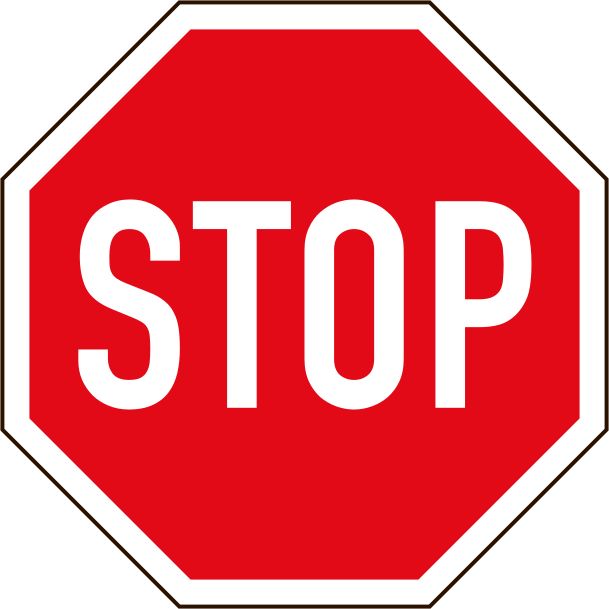
A stop sign requires the vehicle to come to a complete halt — the wheels stationary — in line with the sign or behind the stop line. Not slowing. Not rolling at walking pace because you can see the road is clear.
This is the single most common reason people fail the road test, and it is examined in the learner's test because the wording is where candidates go wrong. A question that says "you may proceed without stopping if the road is clear" is always false at a stop sign.
Work it through
You approach a stop sign. You can see 200 m in both directions and there is no other vehicle anywhere.
You still stop completely, then move off.
The obligation is to stop, not to give way. An empty road changes nothing about it.
Where people lose the markTreating a stop sign as a yield when the road is visibly clear.
Yield means give way
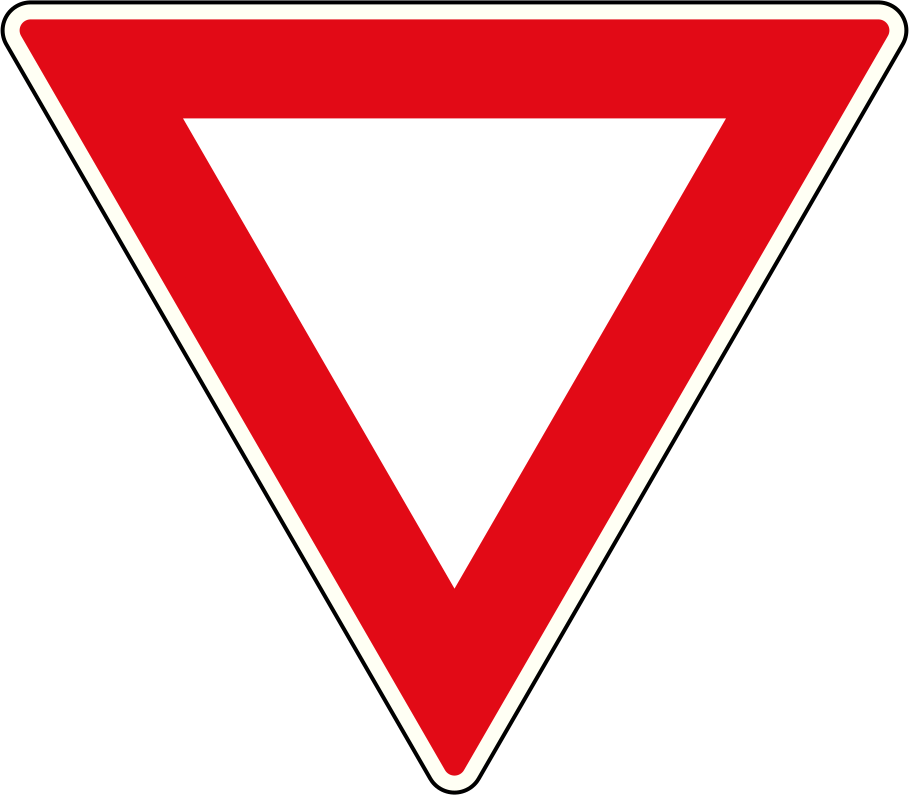
A yield sign is conditional. You must give way to cross traffic and to pedestrians crossing or waiting to cross, and you stop only if stopping is what giving way requires.
So at a yield with nothing coming, you may roll through. At a stop with nothing coming, you may not. That difference is exactly what the test asks about.
Where people lose the markStopping dead at every yield sign, which is not wrong in law but is marked as a fault on the road test for obstructing traffic.
Three-way and four-way stops
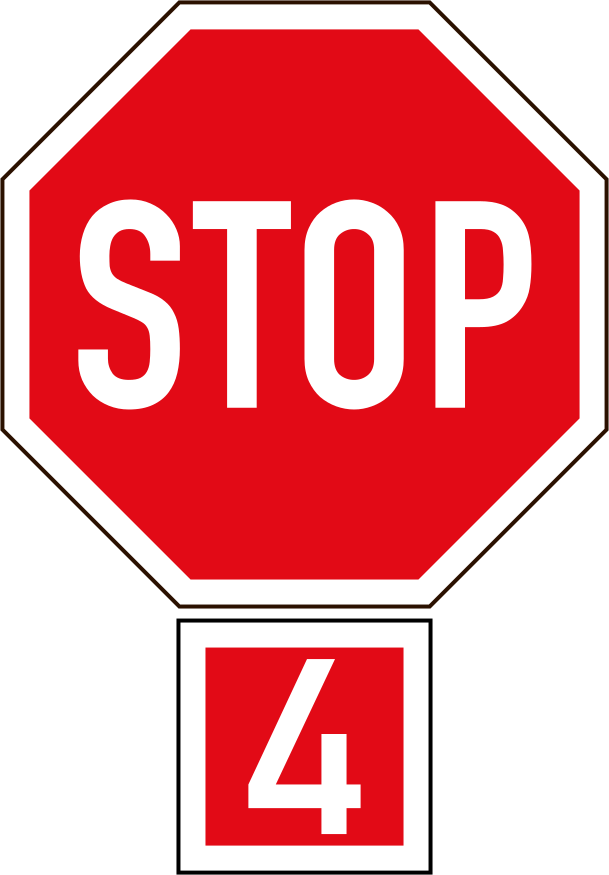
The plate under the octagon tells you how many approaches must stop. Every one of them stops — the sign is not telling you that you have priority over the others.
Order is decided by arrival: the vehicle that stopped first goes first. If two arrive at the same moment, the one on the right goes first.
Work it through
You and another car reach a four-way stop at exactly the same time. They are on your right.
They go first.
Simultaneous arrival is broken by the yield-to-the-right rule. Nothing about vehicle size, or who is going straight, comes into it.
Where people lose the markBelieving the vehicle going straight has priority over one turning. It does not.
The two that are easy to miss
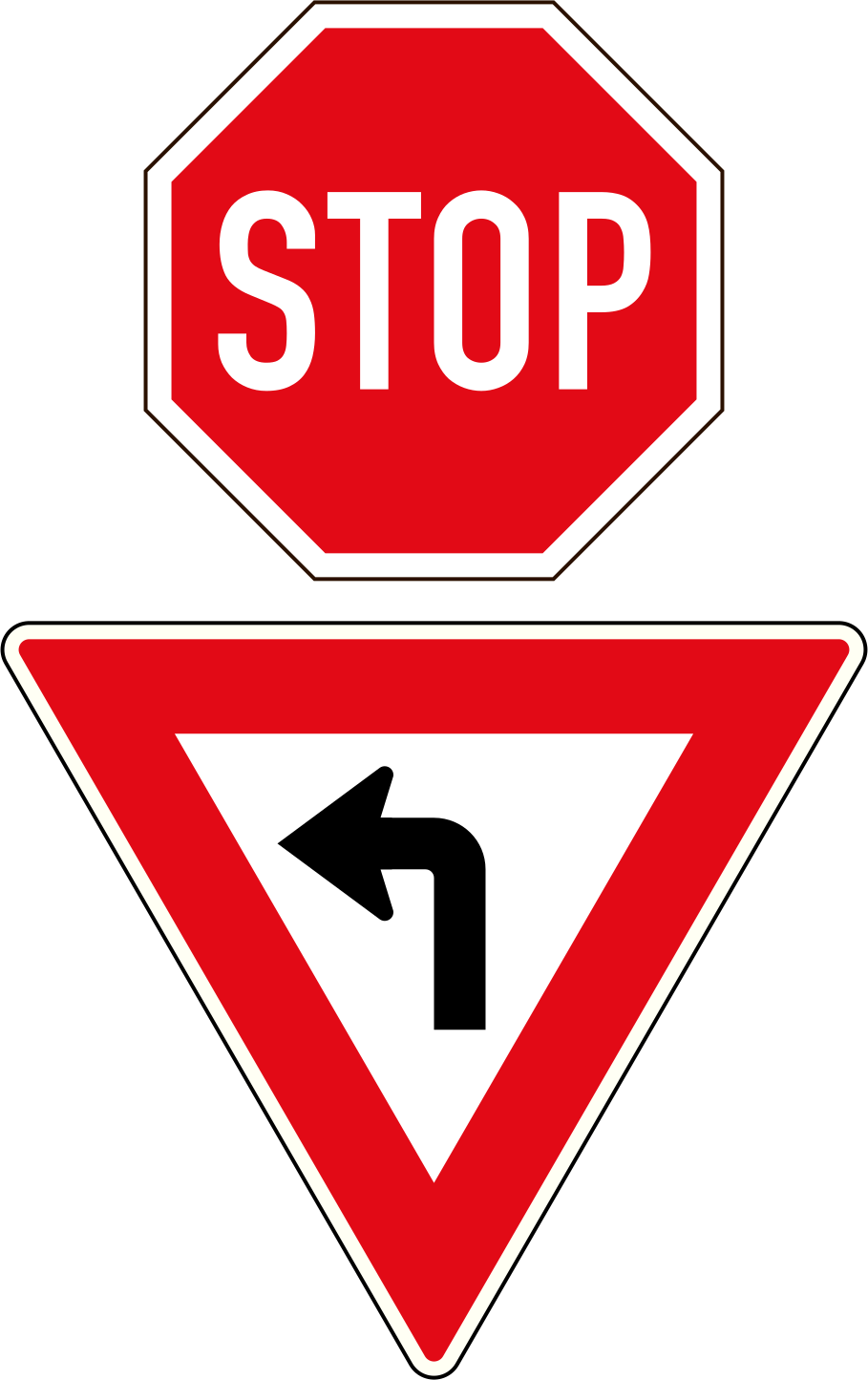
A stop sign with a small triangle and a left arrow below it means stop if you are going straight or turning right, but you may turn left without stopping when it is safe. You still give way to cross traffic and pedestrians.
The hand-held sign at roadworks has STOP on one face and GO on the other. It is turned by a person, and it carries the same authority as a fixed sign.
Carry this into the practice
- Stop is unconditional. Yield is conditional.
- At a multi-way stop, first to stop goes first; if simultaneous, the vehicle on the right.
- Shape identifies the sign before you can read it — octagon stop, point-down triangle yield.